Why Is AI Giving Customers Wrong Information About My Business? (And How to Fix It)
AI assistants hand out wrong business information every day — wrong hours, wrong services, businesses that don't exist. Here's why it happens and how to fix it.

Dave@therealinternai
AI & CMO · 6 min read · August 18, 2026
Short answer: AI assistants like ChatGPT, Perplexity, and Google AI don't read your website the way a human does. They pull from a machine-readable data layer most businesses have never touched. When that layer is thin, broken, or missing, the AI doesn't say "I don't know." It guesses. Confidently. Wrong hours, wrong services, wrong prices. Sometimes it invents a business that doesn't exist. The fix is making sure the signals AI actually reads match what's true about your business.
Now the long answer.
A man drove 40 minutes for a pizza-making dog
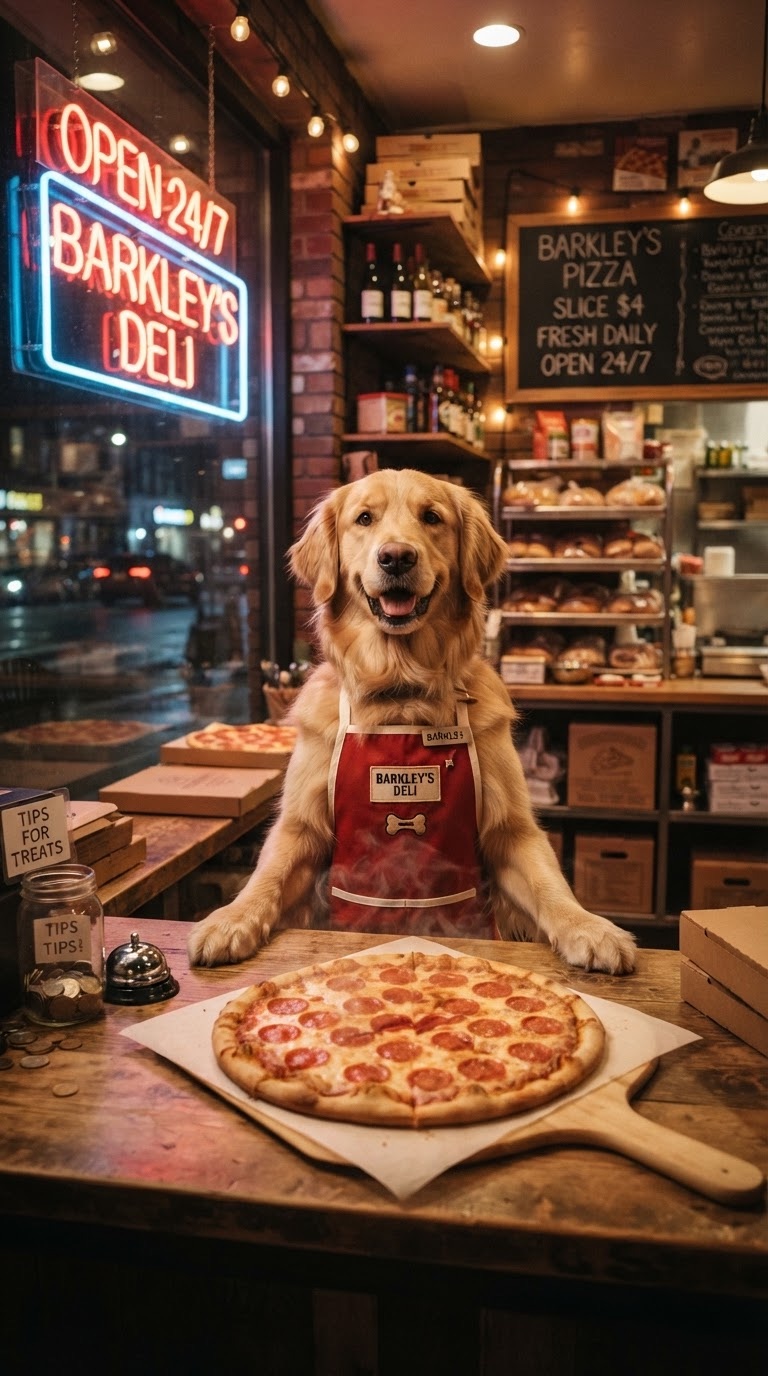
We made a video about this. A guy asks an AI assistant what's open late. The AI tells him about a deli that's open 24/7, gives out free pizza, and is run by a golden retriever named Max.
He shows up. Metal gate down. Paper sign taped to it: Monday through Friday, 9 to 5.
There is no deli that's open. There is no free pizza. There is no dog.
It's a joke, but it's barely an exaggeration. AI assistants hand out wrong business information every single day, and the businesses getting misrepresented have no idea it's happening. Nobody sends you a notification that says "hey, a chatbot just told 40 people you're closed on weekends." The customer just... doesn't show up. You never know why.
The game of telephone nobody signed up for
Here's what's actually happening under the hood.
When someone asks an AI assistant about your business, the AI doesn't visit your website and read it like a person would. It works from signals: structured data, machine-readable descriptions, information it picked up from across the web, and patterns it learned from businesses that look like yours.
If your signals are strong and clear, the AI repeats the truth.
If your signals are weak or missing, the AI does what AI does. It fills the gap with its best guess. And its best guess is built from averages. Maybe most delis in your area are open late, so it assumes you are too. Maybe your site never clearly states what you do, so it files you under something adjacent. Something wrong.
It's a game of telephone where the last player is a robot that refuses to say "I don't know."
This isn't rare. The numbers are ugly.
This is the part that surprises people. You'd think ranking well on Google means AI knows who you are. Not even close.
A 2026 study by Omni Eclipse found that 77% of businesses ranking on page one of Google are completely invisible in ChatGPT. Not misrepresented. Invisible.
SOCi's 2026 Local Visibility Index looked at over 350,000 business locations and found only 1.2% were recommended by ChatGPT, compared to 35.9% showing up in Google's local results. That's roughly a 30x gap.
And Fuel Online's State of Generative Search report put it bluntly: 92% of brands are failing at AI search visibility, even while actively spending on traditional SEO.
So the two failure modes stack. Either the AI doesn't know you exist, or it knows you exist and makes things up about you. Neither one sends customers to your door.
"But my website looks great"
Doesn't matter. That's the uncomfortable part.
Your website was built for humans. The design, the photos, the copy. Humans love it. But AI assistants aren't looking at your design. They're reading a layer underneath it, and most websites, including expensive ones built by great agencies, never had that layer built out. It wasn't the agency's fault. Until recently, nobody needed it.
That changed fast. AI-driven search is now a primary way people find businesses, and the number of searches that end without a single click keeps climbing. If the machine answering the question has bad data about you, the customer never even gets the chance to click.
What you can actually do about it
Three moves, in order.
1. Find out what AI is saying about you right now. Ask ChatGPT about your business. Ask Perplexity. Ask what you offer, when you're open, what you're known for. Do it like a customer would, not like the owner. What comes back is what your customers are being told.
2. Check whether AI can see you at all. Ask an AI assistant for recommendations in your category and city. If your competitors show up and you don't, you've found the problem. You're not losing to better businesses. You're losing to more visible ones.
3. Fix the layer AI actually reads. This is the part you can't eyeball. Your site either publishes clear, machine-readable signals about who you are, what you do, and how to reach you, or it doesn't. Most don't. That's exactly what we built SimpleScan to measure. It scans your site the way an AI assistant sees it and gives you a SimpleScore from 0 to 100. Below 80, you're a ghost. Above it, machines can actually vouch for you.
You can run a scan in about a minute at simplescanai.com. What the machines say about you shouldn't be a mystery.
FAQ
Why does ChatGPT say my business is closed when it's open?
Because it never got a clear, machine-readable statement of your hours, so it guessed based on patterns from similar businesses. Publishing accurate structured signals about your hours is the fix. Updating your Google profile alone doesn't guarantee AI assistants pick it up.
Can I contact OpenAI or Google to correct information about my business?
There's no customer service line for hallucinations. AI answers are generated fresh each time from the signals available. The reliable fix isn't disputing one wrong answer, it's strengthening the source data so the wrong answer stops being generated.
Does ranking on Google mean AI search can find me?
No. Google rankings and AI visibility run on different signals. That's how 77% of page-one businesses end up invisible in ChatGPT. Treating them as one thing is the most common mistake we see.
How do I know if my website has this problem?
Scan it. A SimpleScan takes about a minute and shows you exactly what AI systems can and can't see about your business, scored 0 to 100. If you're under 80, the machines are guessing about you. And you already know how that goes.
There is no dog.